
Long before it became the undisputed uniform of breezy European summers and relaxed vacation tailoring, linen was doing the heavy lifting for human history. Today, we view it through a lens of luxury and seasonal comfort, quietly forgiving its persistent wrinkles for the sake of its effortless charm. Yet to see linen merely as a warm-weather wardrobe staple is to miss one of the most resilient, versatile, and high-impact textiles ever created.
Before it caught the Mediterranean breeze, flax was the ancient world’s answer to functional performance wear. It was the material that wrapped pharaohs for eternity, shielded ancient conquerors from arrows, rigged the sails of legendary explorers, and provided the literal foundation for modern clothing. Linen didn’t just accompany the rise of human civilization; it provided the very structural thread that pulled it forward.
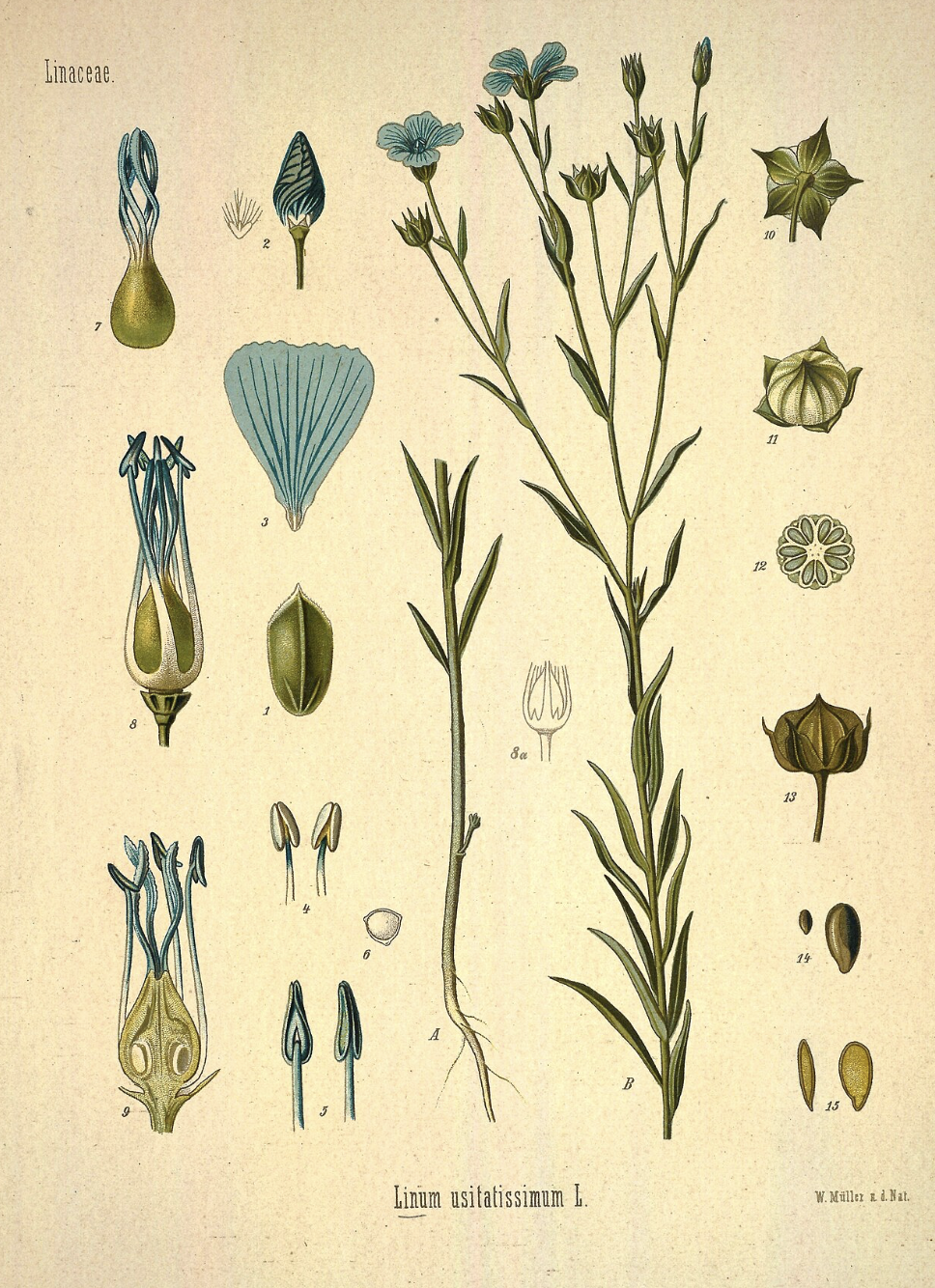
Flax. Source: Wikipedia
Spotlight: What exactly is flax?
Before it becomes a crisp shirt, linen begins its life as flax (Linum usitatissimum) — a slender, blue-flowering plant that thrives in cool, damp, temperate climates. Today, the world’s finest flax is grown along the coastal band of Western Europe (predominantly Northern France, Belgium, and the Netherlands), where the ideal mix of ocean breeze, rich soil, and natural rainfall creates long, resilient fibers.
Then it comes to the art of harvesting
Unlike cotton, which is picked, flax is never cut. To preserve the maximum length of the precious fibers hidden inside the stem, the entire plant is gently pulled out of the ground by its roots.
What follows is an ancient, almost magical natural process called retting:
- Dew Retting: Harvested flax stems are laid out flat in the fields for several weeks.
- Nature’s Work: Rain, morning dew, sun, and natural soil micro-organisms slowly dissolve the vegetable pectin (“glue”) binding the inner fibers to the woody stem.
- Scutching & Spinning: Once dry, the plant is crushed (scutched) to separate the soft, silvery flax fibers from the woody core, ready to be combed and spun into yarn.
Time for a quick trip back in history
As with many ancient technologies, scientists and archeologists face significant hurdles when trying to pinpoint the exact origin of linen as we know it today. Because organic plant fibers decompose rapidly unless preserved under extraordinary climate conditions, tracing the precise moment flax crossed the line from a wild plant to a woven textile is a delicate puzzle.
However, what we do know paints a fascinating picture of early human ingenuity.
The earliest agricultural traces of cultivated flax emerge from the Fertile Crescent in the Near East, where domesticated linseed remains date back as far as 8700–7000 BCE. From there, the trail of cultivated flax moves steadily across continents: seeds found in Southern Europe date to 6000–6500 BCE, while those discovered in Central Europe trace back to 5400–4900 BCE.
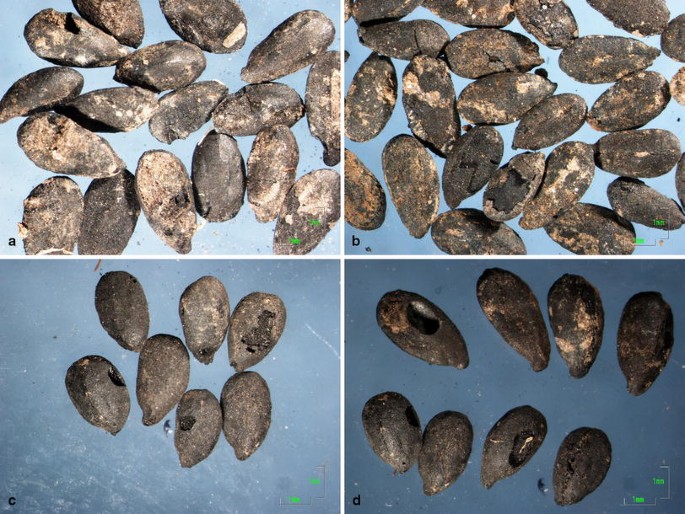
Flax in Neolithic and Bronze Age Greece: archaeobotanical evidence. Source :Book ‘Vegetation History and Archaeobotany’.
Yet, as impressive as these agricultural timelines are, ancient artifacts tell an even wilder story—stretching deep into the Paleolithic era. In 2009, archeologists excavating Dzudzuana Cave in Georgia uncovered microscopic wild flax fibers (Linum bienne) embedded in a sediment layer dated to an astounding 30,000 years ago. Prehistoric hunter-gatherers were not merely gathering raw plants; microscopic analysis revealed that these Paleolithic humans were actively twisting, spinning, cutting, and even dyeing flax fibers using natural elderberry and knotweed pigments. Long before humanity ever mastered farming or animal husbandry, it had already unlocked the fundamentals of fiber engineering.
We tend to attribute almost everything truly ancient to Egypt. And while archeology proves flax was processed thousands of years before the pharaohs, it was indeed along the Nile that linen became a massive national industry.
In Ancient Egypt, linen became an engine of state finance, a symbol of divine purity, and a standardized currency. Because metallic coinage did not yet exist, tax assessments, land purchases, and administrative salaries were regularly calculated and paid in bolts of woven linen. Religious doctrine strictly forbade temple priests from wearing animal fibers like wool, which were classified as ritually “unclean.” Linen, born purely from the earth, became the mandatory uniform of the sacred.
This obsession with purity followed Egyptians into the afterlife. The oldest surviving tailored garment in the world – the Tarkhan Dress, radiocarbon-dated to around 3400–3100 BCE – is a finely pleated linen shirt featuring an intricate V-neck and delicate sleeves, proving that advanced tailoring flourished over 5,000 years ago.
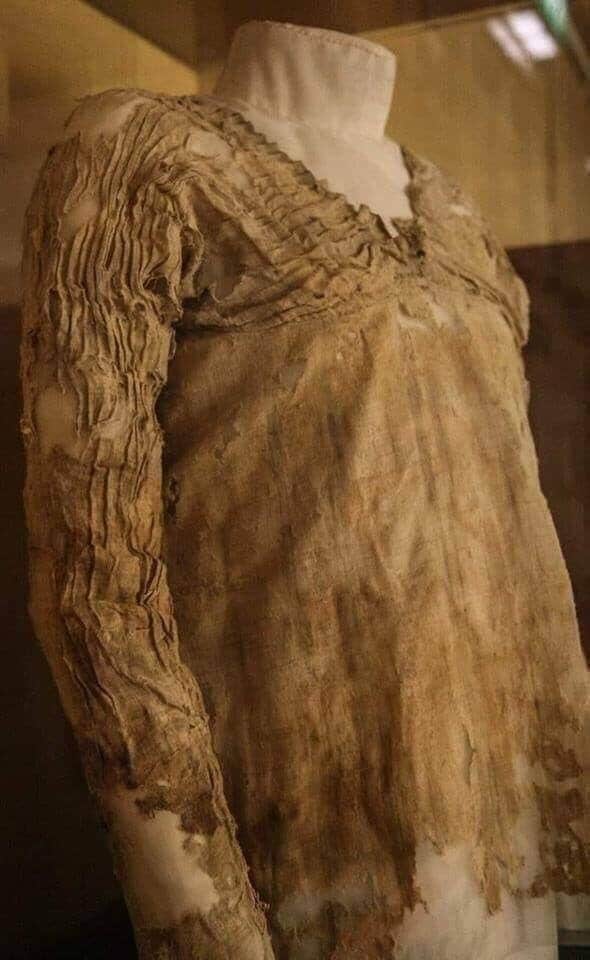
Tarkhan dress a linen garment that is over 5,000 years old and the oldest surviving piece of woven clothing.
Source: Wikipedia
When pharaohs died, they were encased in hundreds of meters of fine linen. This was not merely ceremonial; it was applied biochemistry. Flax fibers naturally contain pectin and antibacterial compounds. When combined with natron salts and resins, the sterile linen wrap created an airtight barrier that preserved structural organic matter across four millennia, keeping the secrets of the ancient world intact for modern eyes.
Fun Fact:
Linen is naturally antibacterial and antifungal. Flax fibers contain natural phenolic compounds and lignins that suppress bacterial growth and prevent mold. This is precisely why linen resists odours better than cotton, keeps sensitive skin healthy, and allowed ancient Egyptian mummies wrapped in linen to survive four millennia without decaying.
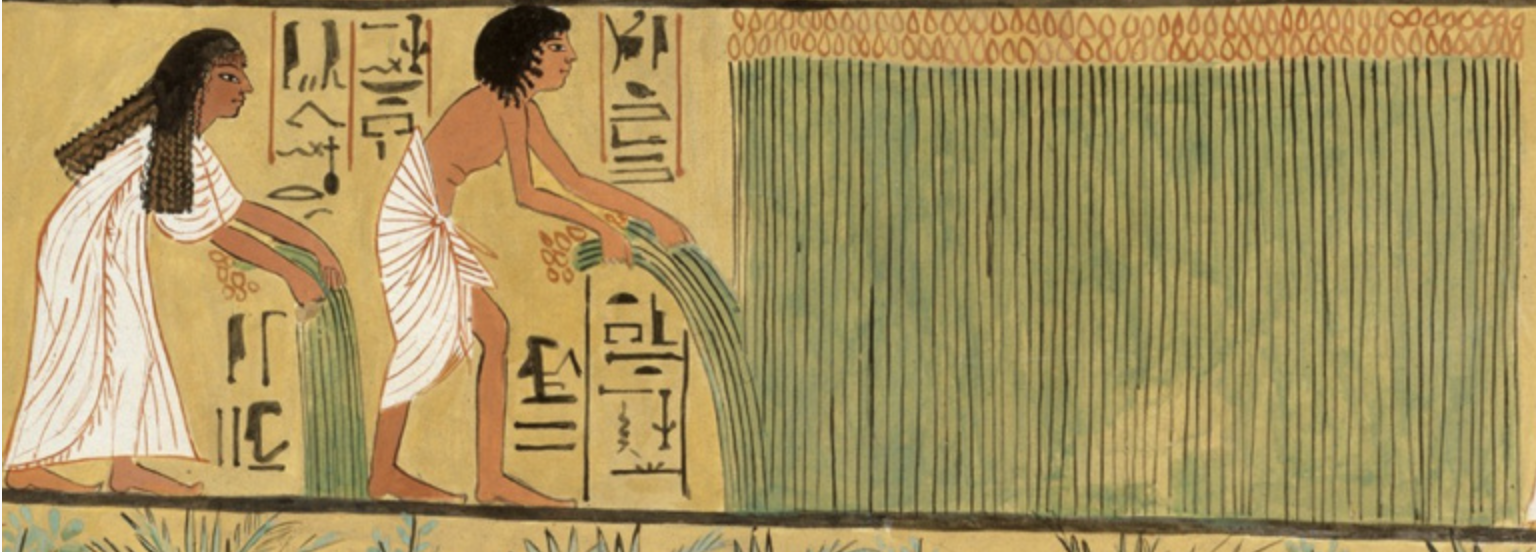
Flax harvesting. Fragment of a wall painting from the Tomb of Sennedjem, Deir el-Medina, Egypt, c. 1295–1213 BC
Linothorax: Linen as ancient body armor
If the Egyptians turned linen into an engine of state economy, the Ancient Greeks turned it into military-grade engineering. Long before flax became synonymous with relaxed summer shirts, it went to battle as the ancient world’s answer to Kevlar.
During the Archaic and Classical periods, heavy infantrymen (hoplites) relied primarily on bronze cuirasses. Metal armor, however, came with severe drawbacks: it was punishingly heavy, stifling in the Mediterranean heat, astronomically expensive, and rigidly unyielding. As battlefield tactics shifted toward greater mobility, Greek armies pioneered an ingenious alternative: the linothorax (from the Greek linon, meaning linen, and thorax, chest armor).
The linothorax was a composite armor made by layering multiple sheets of dense flax cloth—often between 15 to 25 layers deep. These layers were either tightly quilted together or laminated using natural animal glues and resins, then molded to fit the torso.
The resulting textile composite was a masterpiece of ancient defense:
Kinetic Energy Absorption: Much like modern aramid fabrics used in bulletproof vests, the dense cross-woven flax fibers absorbed and dispersed the kinetic energy of incoming strikes. Arrows fired from composite bows and thrusts from iron spears were caught within the rigid, multi-layered mesh rather than piercing straight through.
Thermal Superiority: Unlike solid bronze, which cooked soldiers under the sun and restricted movement, laminated linen was lighter, far more breathable, and flexed naturally with the body.
Economic Scalability: A bronze chestplate was a luxury reserved for wealthy elites. The linothorax, being drastically cheaper and faster to produce, allowed city-states to arm vast armies of regular citizens without bankrupting their treasuries.
The effectiveness of linen armor reached its peak under Alexander the Great. Historical accounts by Plutarch note that before the decisive Battle of Gaugamela in 331 BCE, Alexander donned a “double-folded linen thorax” captured from Persian spoils. Lightweight, resilient, and mass-producible, linen armor provided the tactical mobility that helped Macedonian phalanxes march thousands of miles and conquer the known world.
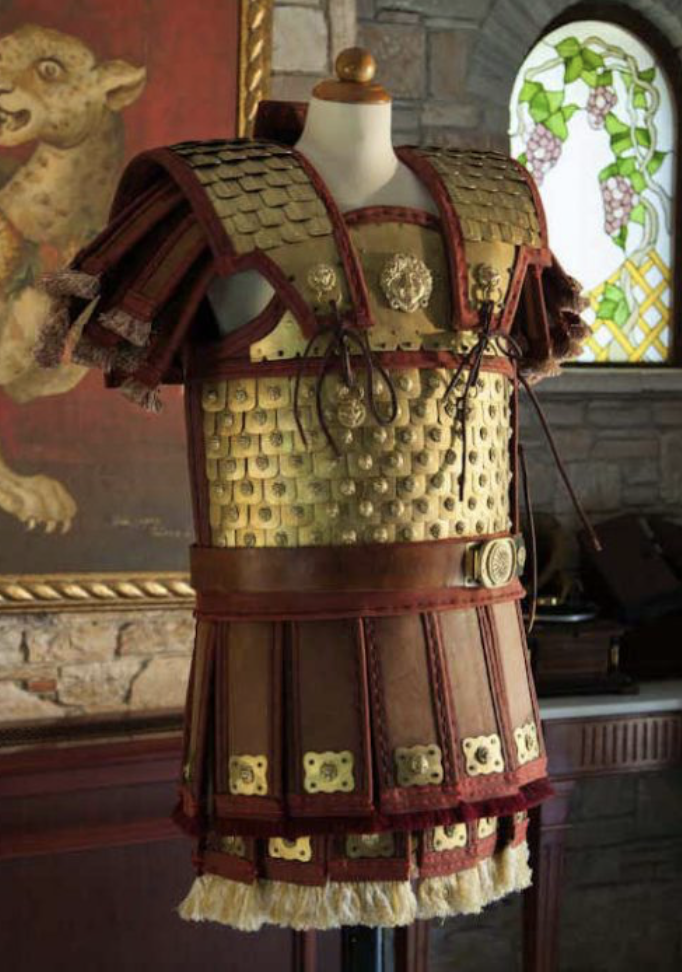
Alexander the Great Linothorax. Source: Hellenic Armors
The Modern Experiment: Testing the Ancient Armor
For centuries, historians doubted whether folded and glued fabric could truly stop a deadly weapon. To test the hypothesis, Professor Gregory S. Aldrete and his team at the University of Wisconsin–Green Bay launched the UWGB Linothorax Project.
Using period-accurate materials—authentic flax cloth, natural rabbit-skin glue, and traditional plant resins—the researchers recreated full-scale replicas of the linothorax. They then subjected these reconstructed armors to rigorous ballistic and penetration testing using reconstructed ancient weapons:
Arrow Tests: When shot at close range with bronze- and iron-tipped arrows, as well as thrusting spears, the multi-layered linen armor successfully repelled or absorbed the vast majority of strikes. The cross-woven fibers dispersed the impact energy, preventing lethal penetration.
The Power of Lamination: Tests demonstrated that 18 to 20 layers of glued linen provided protection comparable to bronze armor of the same era, but at a fraction of the weight and cost.
The Verdict: The experiment definitively proved that the linothorax was not a myth or a compromise for poor soldiers, but a sophisticated, high-performance technology that allowed ancient armies to dominate the battlefield.
Middle Ages to Industrial Age
As civilization moved into the Middle Ages, linen shifted from the battlefield to become the absolute backbone of European daily life, global trade, and artistic revolution.
The fabric’s medieval explosion was heavily jumpstarted by royal decree. In 789 CE, the Frankish Emperor Charlemagne issued a famous capitulary requiring every peasant family within his empire to cultivate flax and master the skills of spinning and weaving. Overnight, flax production was transformed from a localized craft into an obligatory staple of Western European agriculture.
By the 12th through 15th centuries, Flanders (modern-day Belgium and northern France) had emerged as the undisputed weaving capital of the world. Wealthy guild cities like Ghent, Bruges, and Kortrijk built massive trading empires around flax. The River Lys running through the region earned the nickname the “Golden River” (Gouden Rivier) because its naturally soft, mineral-rich waters were uniquely perfect for retting soaking flax stems to separate the usable fibers from the woody core.
It was also during this era that linen laid the linguistic foundation for modern fashion. Because medieval outer garments were crafted from coarse, scratchy wool, people wore a soft, unbleached linen layer directly against their skin to prevent irritation. From the Latin linum and Old French lin, this humble undergarment gave birth to the words lingerie, lining (the inner protective layer of a coat), line (originally a stretched flax string used for straight measurement), and the word linenitself.
In the 15th century, linen quietly triggered a massive revolution in fine art. Master painters in Renaissance Venice—faced with a humid lagoon climate that warped traditional wooden panels—began stretching heavy flax canvas over wooden frames instead. Flax provided a lightweight, durable, and rot-resistant surface, allowing artists like Titian and Tintoretto to create monumental masterpieces that could be rolled up and transported across Europe.
Simultaneously, linen provided the physical power behind the Age of Discovery. The giant sails catching the wind on Christopher Columbus’s fleet and Vasco da Gama’s ships were crafted from heavy-duty linen canvas (a word derived from the Latin for hemp/flax weaves). Flax fibers possess a rare physical superpower: unlike most natural materials, they gain roughly 20% to 30% in tensile strength when wet and naturally resist decay from saltwater. Without acres of woven flax catching the wind, the maritime trade routes that mapped the globe could not have existed.
By the 17th and 18th centuries, following an influx of skilled French Huguenot weavers, Northern Ireland (Ulster) mechanized flax spinning and became the world’s leading exporter of fine Irish linen, solidifying flax as one of the first truly globalized industrial trades.
The Italian Secret: Finishing & Weaving
While the finest raw flax plant is naturally cultivated along the damp coastal fields of Western Europe, Italy is where flax transforms into art.
Centuries of textile heritage in famous Italian districts—from the historic mills of Prato and Biella to the cellulosic finishing houses of Lombardy—have perfected the art of linen weaving and processing. Italian mills don’t just weave flax; they apply proprietary washing, enzyme, and mechanical finishing techniques that give Italian linen its signature cloud-like drape, thermal balance, and rich tactile texture without compromising the fiber’s natural strength.
Today, linen is prized not for artificial perfection, but for its functional superiority:
Micro-Climate Regulation: Long flax fibers create a breathable, open-weave structure that allows maximum airflow while rapidly evaporating skin moisture.
Natural Anti-Bacterial Shield: Rich in natural lignins, linen naturally resists bacteria, mold, and odor retention.
Timeless Aesthetics: The characteristic gentle crinkle of Italian-milled linen is no longer seen as a flaw, but as a subtle mark of relaxed sophistication and effortless style.
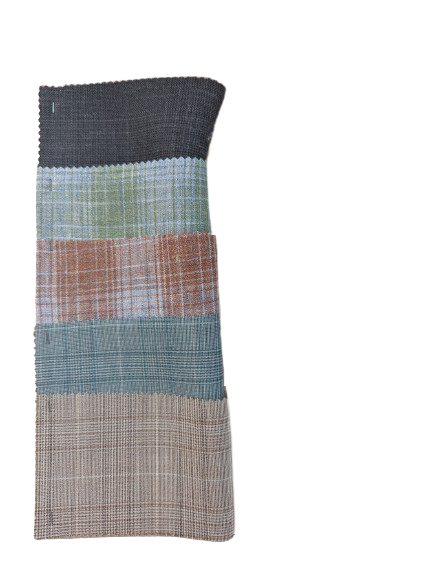
Conclusion: Discover Our Sourced Collection
From 30,000-year-old Paleolithic caves and Egyptian treasuries to Greek battlefields and Renaissance Italian workshops, flax has proven to be one of the most durable, versatile, and noble materials in human history.
As an Italian-based sourcing agency, we work directly with top-tier mills to select only the finest high-end European linens—combining sustainable roots with legendary Italian craftsmanship.
Pingback: European vs. Asian linen: Is it worth it to pay double for the same fiber? – Constrvctor