

Every fabric has an origin story, but viscose was born out of a very specific 19th-century obsession: replicating the liquid sheen and cool touch of natural silk without paying imperial prices.
Here is the twist most articles skip. The same chemistry that gave us silky ballgowns also gave us cellophane, sausage casings, kitchen sponges and the tire cords that once carried cars down the road.
Viscose is not just a fabric. It is a whole industrial dynasty, and the fabric is only its best-dressed member.
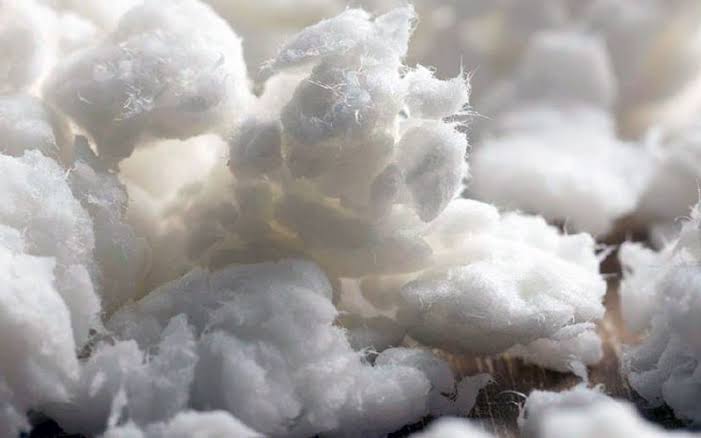
From forest to fiber: bleached dissolving wood pulp ready to be
transformed into viscose yarn. Source: Paper-pulper.com
Born in a fire hazard: the chaotic first chapter
Before we got the fluid, high-performance weaves we use today, the journey was surprisingly chaotic.
In the 1880s, French chemist Hilaire de Chardonnet patented the first commercial “artificial silk,” made from nitrocellulose. There is a lovely irony in his résumé: Chardonnet had worked in the circle of Louis Pasteur, whose research on silkworm disease was trying to save the natural silk industry. Chardonnet decided to replace the worm altogether. Legend says the idea struck him after he spilled collodion (a nitrocellulose solution) in his darkroom and noticed sticky threads stretching from the puddle. When he showed his shimmering fabric at the 1889 Paris Exposition, visitors were stunned.
It looked spectacular, but it carried one catastrophic flaw: nitrocellulose is chemically close kin to guncotton. The fabric was so violently flammable that it earned the dark nickname “mother-in-law silk,” and it burned down more than a few early factories before mills realized that spinning explosive compounds into ballgowns was a liability.
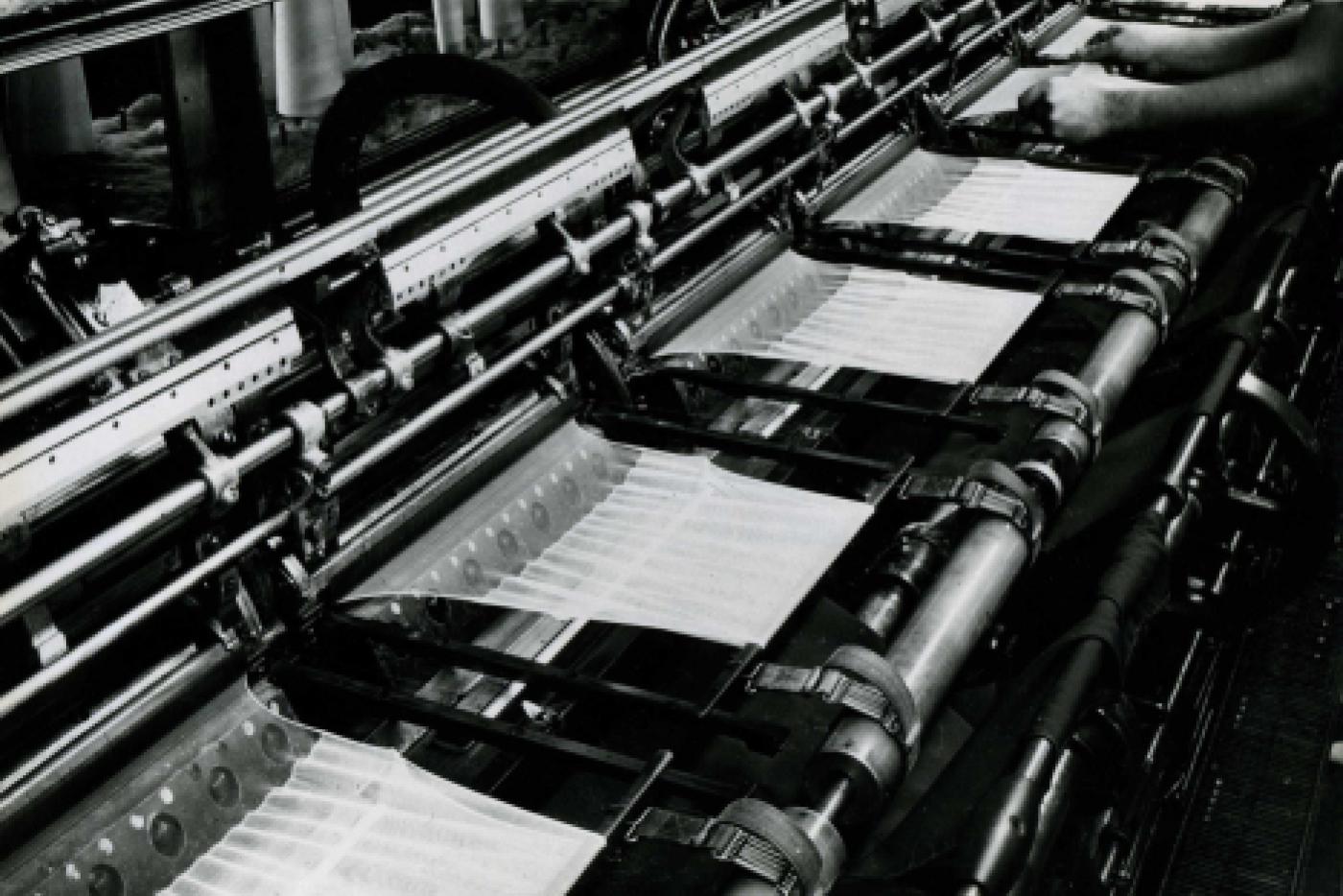
Early 20th-century rayon manufacturing in action.
Source: NC Department of Natural and Cultural Resources.
The breakthrough came in 1892, when three British chemists, Charles Frederick Cross, Edward John Bevan and Clayton Beadle, discovered a safer way to break down plant cellulose using sodium hydroxide and carbon disulfide. The resulting thick, honey-like solution was so remarkably dense that they named it viscose, from the Latin viscosus, meaning sticky.
In 1904, British textile giant Courtaulds bought the patent rights and opened the first commercial viscose plant in Coventry in 1905, followed by the American Viscose Company in Pennsylvania in 1910. By the 1920s, this lab-born fiber had taken over both sides of the Atlantic.
The kitchen-drawer family: viscose’s strange cousins
Here is where the story gets fun. Viscose is a process, and the process does not care whether it ends up as a thread or a sheet.
Squeeze the same sticky solution through a narrow slit instead of a spinneret and you get a transparent film. That film is cellophane, invented by Swiss chemist Jacques Brandenberger in 1908 (reportedly after he watched a wine spill ruin a restaurant tablecloth and wondered how to make a waterproof one). Extrude it into a tube and you get the casings that hold many industrial sausages. Fill it with foaming agents and you get the cellulose sponge by your sink. Spin it into tough, high-tenacity filaments and you get tire cord, which for decades was one of rayon’s biggest markets.
So the next time someone calls viscose “just a cheap silk imitation,” remember: it is a material that has wrapped sandwiches, cleaned countertops and held rubber together at highway speed.
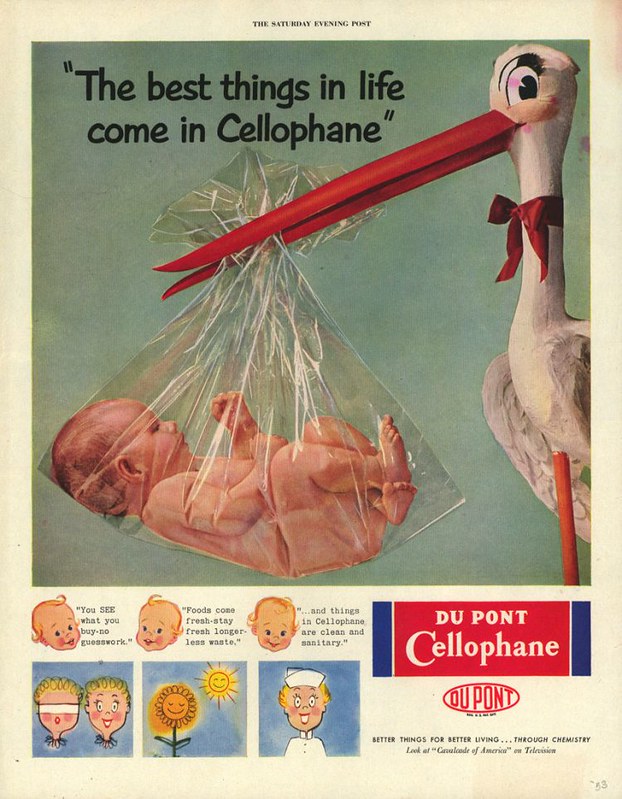
The best things in life come in Cellophane”: vintage 1953 DuPont advertisement for regenerated cellulose film. Source: The Saturday Evening Post (1953).
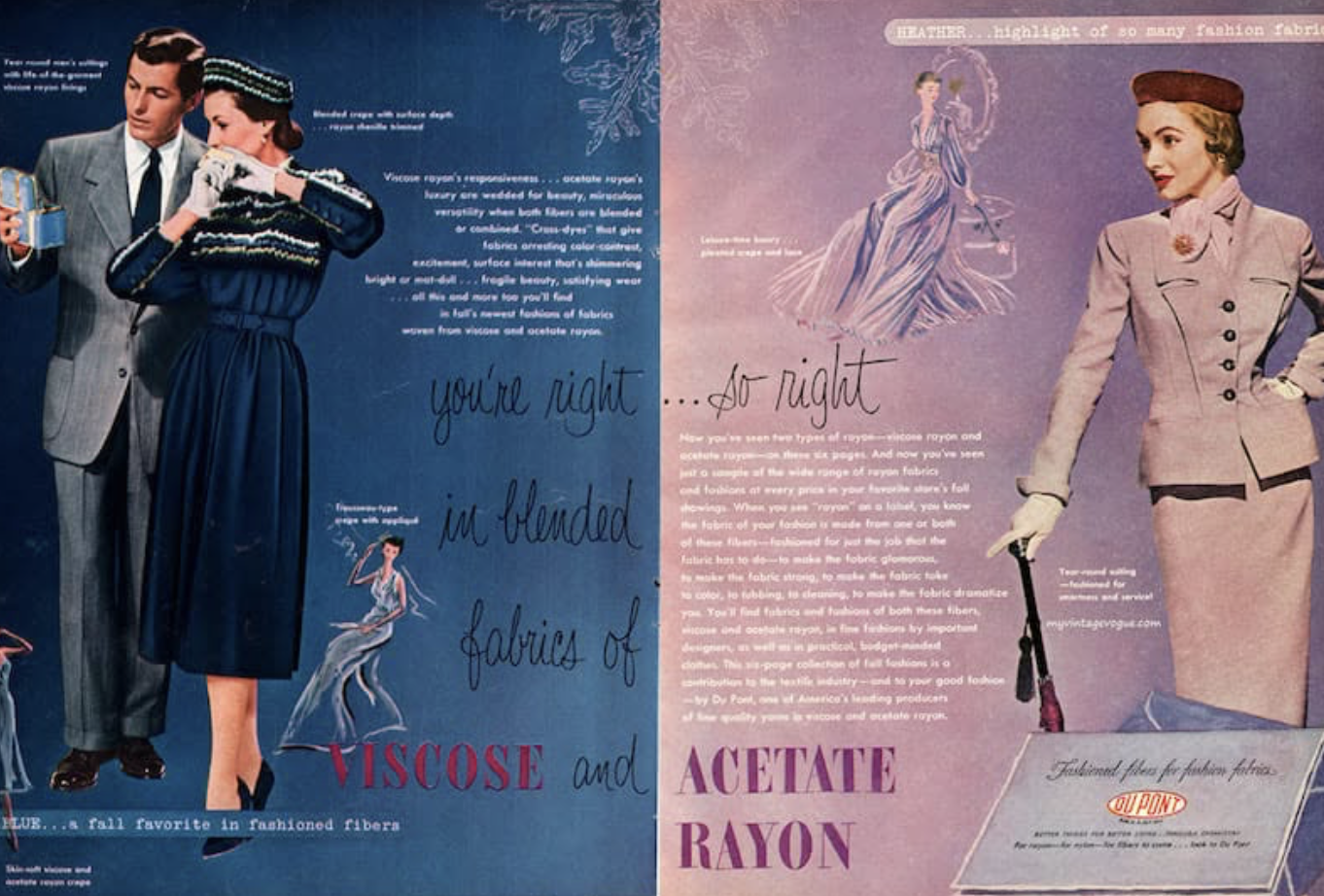
Vintage DuPont advertisement for viscose and acetate rayon fabrics, Vogue (1950). Source: My Vintage Vogue.
The terminology trap: viscose vs. rayon
If you’re sourcing fabrics internationally, the labeling terminology can get confusing fast.
Rayon is the umbrella term that took hold in the US in 1924 to replace the awkward, slightly insulting “artificial silk.” Etymologists usually link it to “ray,” as in a ray of light, a nod to the fiber’s shine. In North America, any fiber made from regenerated cellulose is classified as rayon.
Viscose is both the European standard term and a specific chemical process. All viscose is rayon, but not all rayon is classic viscose.
Why does this matter on the cutting table? Standard viscose feels incredible, but it gets weak when wet and can shrink if you look at it wrong. Two relatives fix those problems in different ways:
- Modal tweaks the chemical bath so the fiber keeps much more of its strength in water. It is a high-wet-modulus cousin: smoother, more stable, more resistant to pilling.
- Lyocell (Tencel™) skips the harsh traditional chemicals altogether, using a different solvent that is recycled at a rate of over 99% in a closed loop.
- Cupro (often sold as Bemberg) is the odd relative. It is also regenerated cellulose, but it is made from cotton linter, the short fuzz left on cottonseeds, dissolved in a copper-ammonia solution. Its drape is the closest thing to silk lining in the cellulosic family.
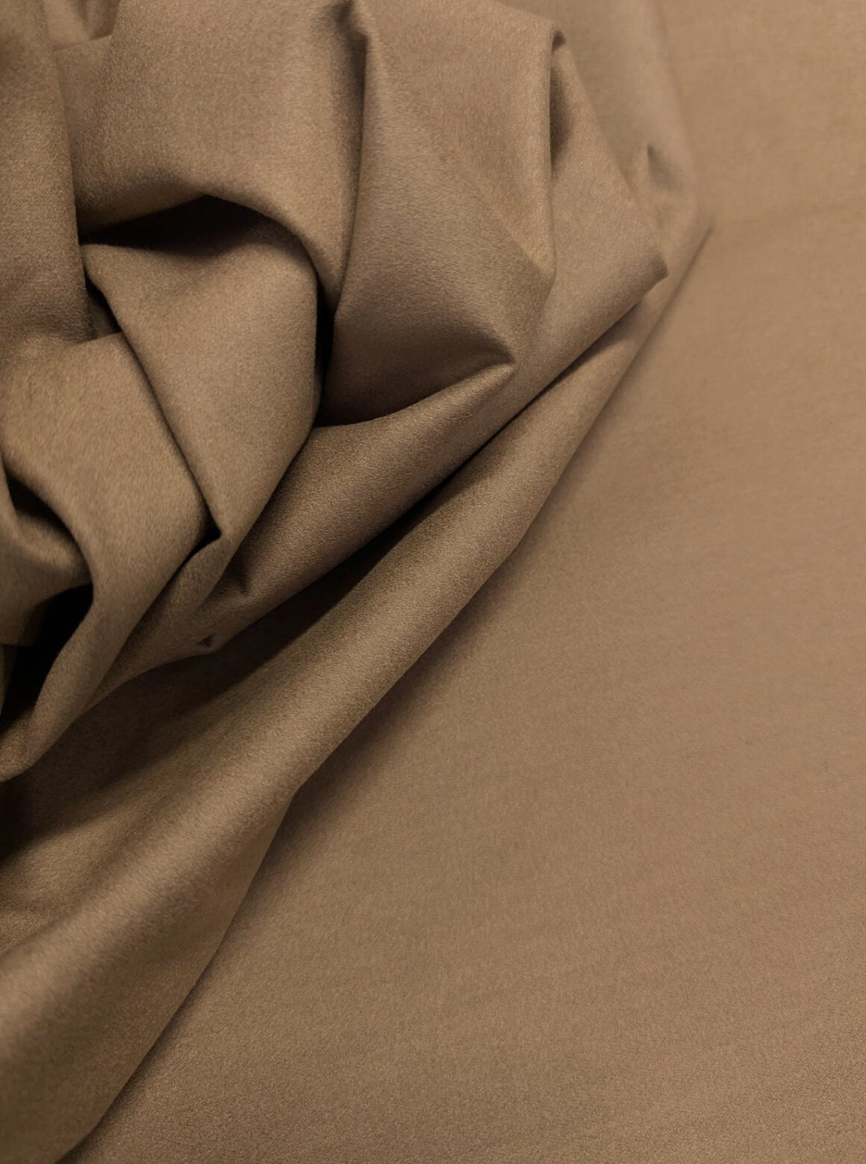
Moleskin Cotton Modal Stretch Camel
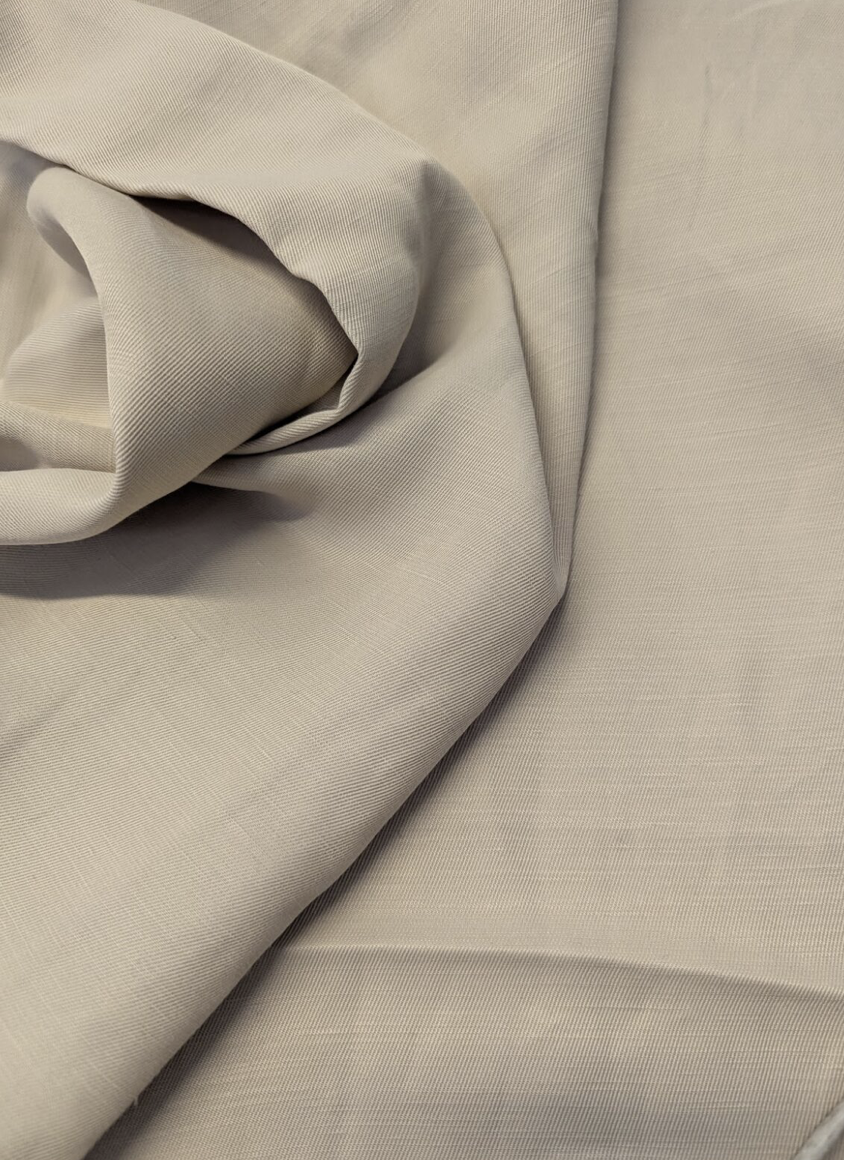
Viscose Linen Cupro Blend Twill Ivory
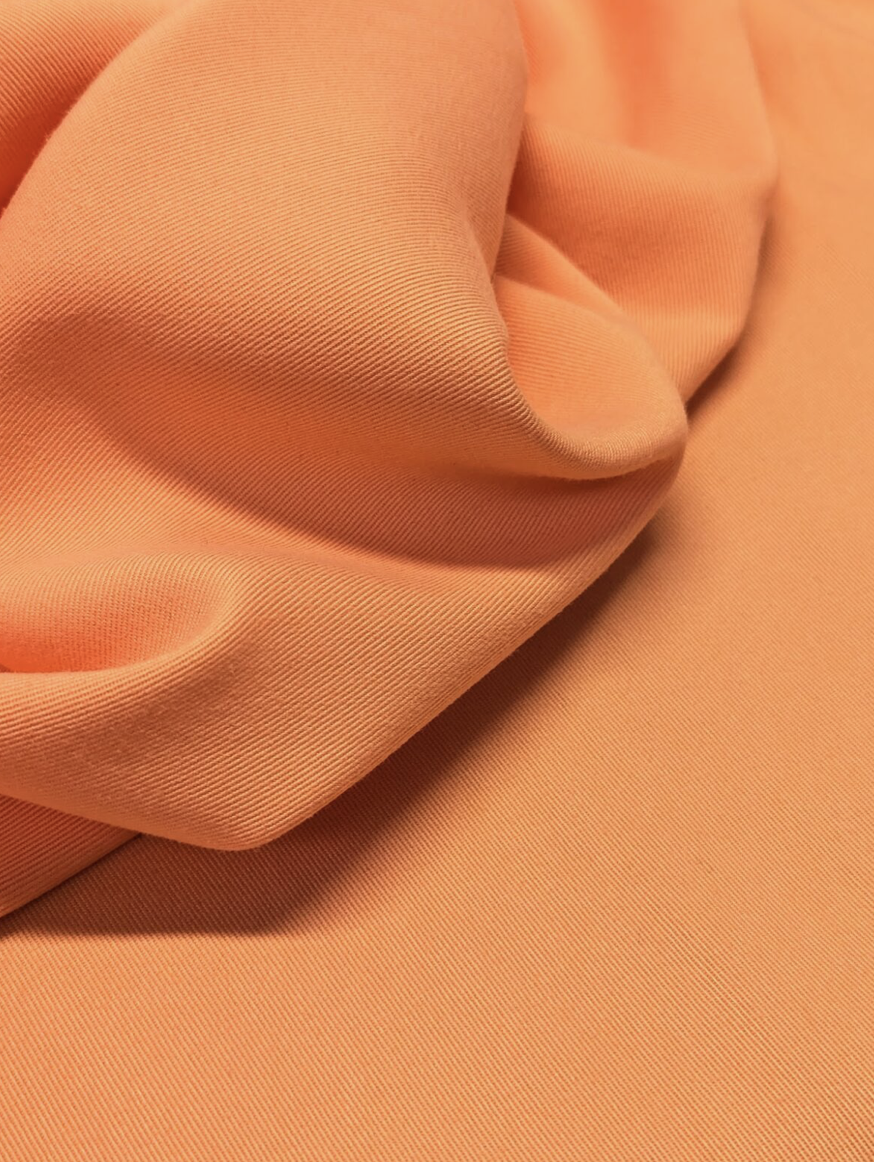
Lyocell Twill Pumpkin Orange
The recipe: how wood becomes a liquid
A quick tour of the factory explains almost everything about viscose’s personality, good and bad.
- Pulp. It starts with dissolving pulp, wood (spruce, pine, eucalyptus, beech or bamboo) refined until it is almost pure cellulose.
- Steeping. The pulp is soaked in caustic soda, which swells the fibers and turns them into “alkali cellulose.”
- Xanthation. Carbon disulfide is added, and the white crumbs turn a startling orange-yellow. This is cellulose xanthate, the chemical hinge of the whole process.
- Ripening. The orange crumbs dissolve into the thick, honey-like syrup that gave viscose its name, then rest for a day or so to mature.
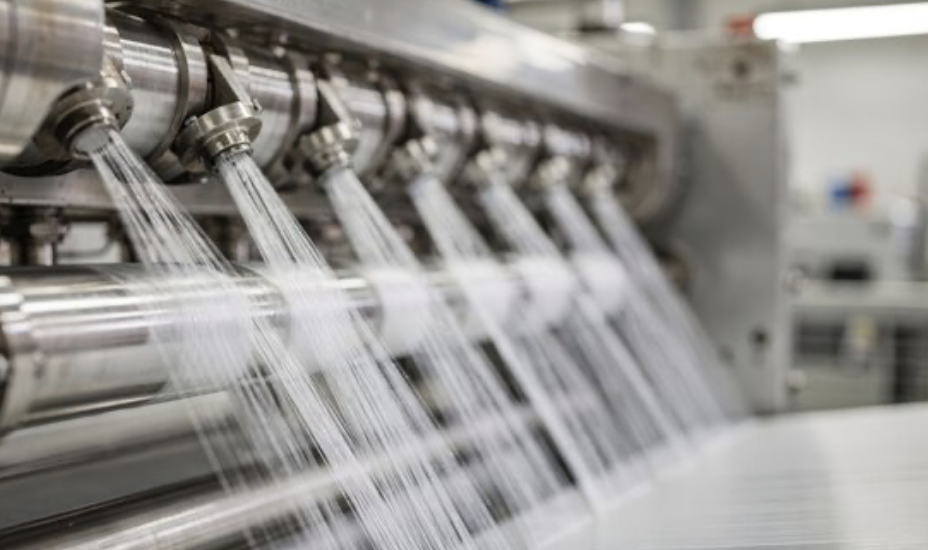
- Spinning. The syrup is forced through a spinneret, a metal nozzle with thousands of microscopic holes, into a bath of sulfuric acid. The cellulose snaps back out of solution and solidifies into filaments.
Notice what happened. The wood’s cellulose chains were chopped shorter along the way, to a fraction of the length found in cotton. Shorter chains and a less crystalline structure explain the fabric’s signature traits: a buttery drape, deep dye absorption, and that frustrating weakness when wet. The beauty and the flaws come from the same source.
Neither tree nor petroleum: the hybrid reality
So where does viscose actually sit on the material spectrum? It belongs to a category called Man-Made Cellulosic Fibres (MMCF).
Why it isn’t fully natural: You cannot harvest viscose from a field like cotton or flax. The wood pulp has to be chemically dissolved, reduced to a syrup and extruded through industrial spinnerets into an acid bath to reform into solid threads.
Why it isn’t synthetic: Unlike polyester or nylon, viscose isn’t built from crude-oil polymers. Because its backbone is pure plant cellulose, it breathes, absorbs moisture and biodegrades, instead of lingering for centuries as plastic.
It is a hybrid creature, and the global industry reflects that. MMCF makes up only a small slice of world fiber production (roughly six percent, a sliver next to polyester), yet it is a powerhouse in the fashion world, and a large share of it is made in China.
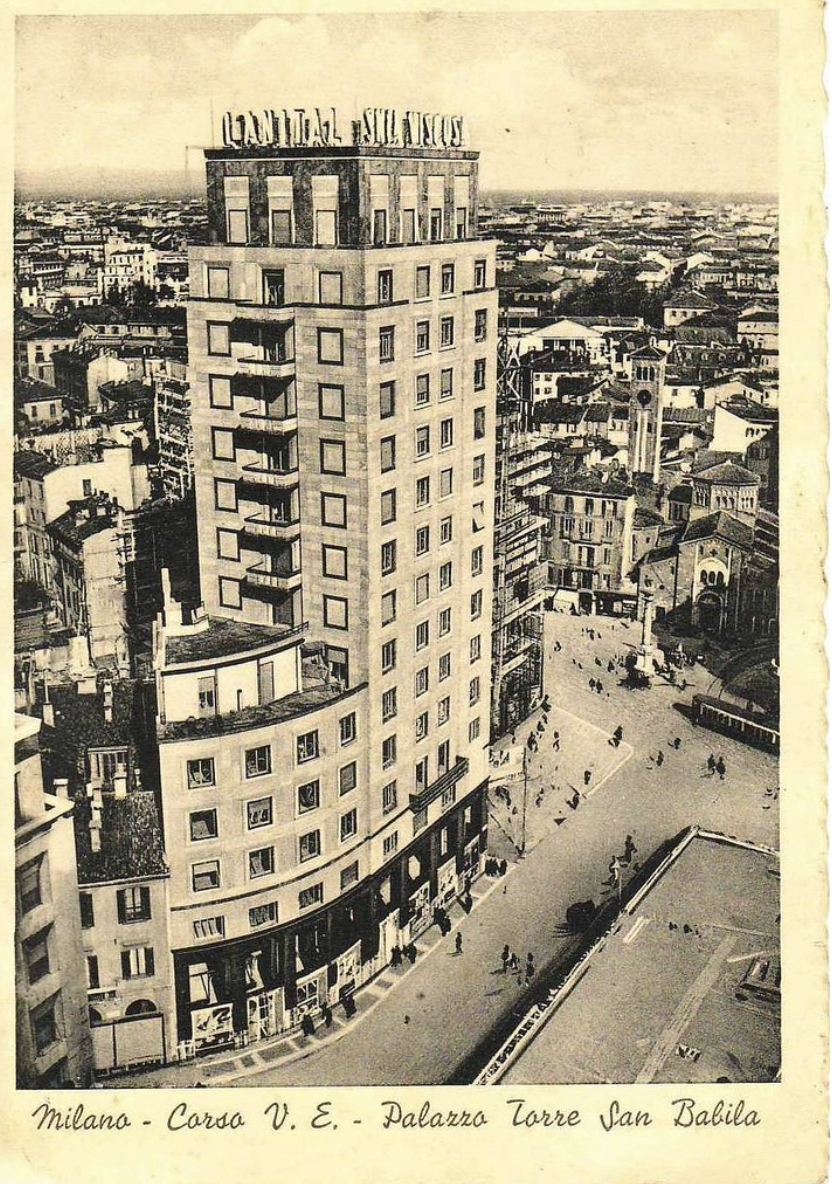
Milano, Torre Snia Viscosa
When Italy bet on wood, reeds and milk
In 1917, Turin-based Snia Viscosa was founded, and it grew into one of Europe’s great rayon empires. In the 1930s, under Mussolini’s drive for economic self-sufficiency, Italy needed fibers that did not depend on imports. The answer was Snia’s ambitious project: Torviscosa, an entire company town built from scratch in Friuli in 1938. Its fields grew giant cane (Arundo donax) to be pulped into cellulose, and its factory spun that cellulose into viscose. The town’s name is a blend of “tor” (from Torre di Zuino, the area) and “viscosa.” You can still visit it today, with its rationalist architecture frozen in time.
The same era produced one of the strangest textiles in history: Lanital, a wool-like fiber made from milk protein (casein), developed in Italy in the 1930s. Italy was literally trying to dress itself in dairy.
The point for today’s designers: northern Italian mills have been weaving viscose for a hundred years. That accumulated know-how is exactly why Italian viscose crepes, jacquards and satins have such a reputation.
The couture moment
Viscose also had its high-fashion hour. In the 1920s, rayon stockings democratized the silk look, putting a shimmering leg within reach of working women. By the 1930s, designers had stopped treating it as a poor substitute. Elsa Schiaparelli’s famous “tree bark” crepe, with its rough, crinkled surface, was a rayon fabric. A fiber invented to imitate silk had become a material with its own aesthetic.
The atelier perspective: why high-end mills still rely on it
Marketing hype aside, viscose remains an irreplaceable tool in pattern cutting and garment construction because of how its molecules interact with light, dye and gravity.
- The gravity of the drape. Because regenerated cellulose fibers are smoother and less crystalline than native cotton, they have a heavy, liquid fall. A weighty viscose cady or crepe de Chine clings and swings in ways that stiffer natural fibers cannot match without heavy chemical softeners.
- Color saturation without sheen glare. Synthetic fibers like polyester can look shiny and cheap because plastic polymers reflect light harshly. Viscose absorbs dye deep into its amorphous regions, which yields saturated jewel tones, deep rich blacks and precise print definition with a soft, expensive luster.
- Thermal comfort. With a moisture regain of roughly 11–13% (compared with cotton’s 7–8% and polyester’s 0.4%), viscose pulls heat and body moisture away from the skin. That is the instant “cool-touch” hand-feel essential for summer tailoring and fluid outerwear.
- A few rules for the cutting table. Viscose rewards respect and punishes carelessness:
It can lose roughly half its strength when wet, so handle it gently in washing and dyeing.
It is prone to water spotting and relaxation shrinkage, so pre-treat and test a swatch before cutting an expensive length.
It slips and frays, so fine needles, French seams and patience pay off.
Press at moderate heat, and test steam on a scrap first.
The sustainability paradox
The controversy around viscose isn’t about how the fabric feels. It’s about how it’s made. Conventional viscose production faces two major critiques.
Deforestation. Sourcing timber from uncertified or ancient forests threatens biodiversity. The nonprofit Canopy has spent years tracking the industry and ranking producers on their forest policies.
Chemical footprint. The traditional process relies on carbon disulfide (CS₂), a volatile chemical that requires strict factory capture systems. Its neurological effects on workers have been documented for well over a century, and poorly controlled plants can pollute local air and water. The acid bath also creates a lot of by-product salt to manage.
Then there is the greenwashing trap: bamboo. Nearly all “bamboo fabric” on the market is viscose that happens to start with bamboo pulp. The plant is renewable, but once dissolved, the product is chemically the same regenerated cellulose. Regulators in the US began cracking down on “bamboo” claims for exactly this reason, and the correct label is viscose (or rayon) made from bamboo.
Responsible producers are responding with fully closed-loop processes, certified forests (FSC or PEFC) and traceability schemes. A few companies are even dissolving old cotton garments into new pulp, which could one day turn viscose into a truly circular material.
The final verdict
Is viscose natural, synthetic, or something entirely different?
It is proudly something entirely different: an ingenious, man-made hybrid that bridges the gap between botanical origin and industrial precision. It began as a replacement for silk, outgrew the role, and went on to wrap sandwiches, clean sinks and drape the shoulders of couture. When sourced responsibly, through certified closed-loop systems or high-end deadstock inventories, viscose isn’t a synthetic compromise. It’s one of the most sophisticated, expressive materials a designer can put on the cutting table……
Looking for viscose you can touch before you decide? Browse our curated selection of viscoses.