
It wasn’t until recently that fashion brands went crazy about deadstock fabrics, to the point where even end consumers know the term.
Even though deadstock has existed for decades, with some brands using it for 15–20 years, it used to be a well-kept secret. Until recently.
Looking back, we can trace this shift to the pandemic,that’s when deadstock fabrics started being mentioned everywhere, with new articles popping up weekly. I remember that around 2021–22 it turned into madness. Hundreds of emails from “emerging designers.”
In wholesale B2B, that’s not normal. On a good week, 5–10 requests is already a great result.
Deadstock fabrics became an entry point to start without huge investments, and as a bonus, an easy way to call yourself a “sustainable brand.”
Is it, though?
Definition
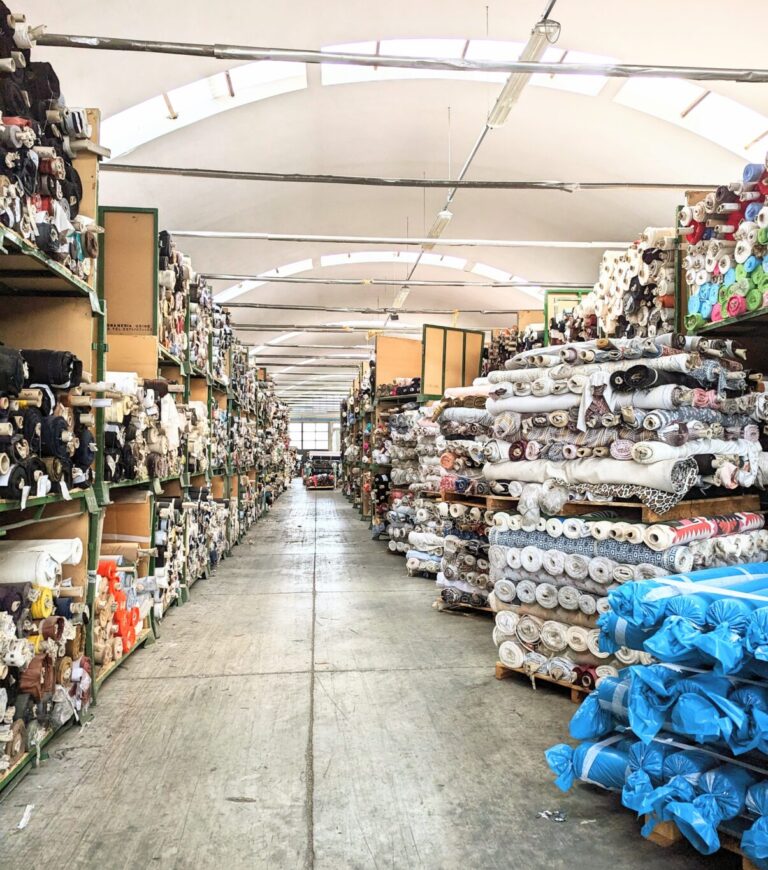
Deadstock fabrics are leftover, unused textiles that were produced by mills or manufacturers but never used for various reasons.
These fabrics often originate from canceled orders, overproduction, or excess inventory.
There are several stock terms in the fashion industry:
Surplus fabrics – textiles produced beyond the original order requirements
Overstock fabrics – excess inventory held by manufacturers or brands
Stock service fabrics – regularly produced fabrics kept in continuous stock and available for repeat orders
While these terms are sometimes used interchangeably, true deadstock usually refers to fabrics originally produced for fashion brands and now available outside the standard production cycle.
Deadstock Fabrics: Pros and Cons for Fashion Brands
Advantages of Deadstock Fabrics
Deadstock sourcing has become increasingly popular among fashion brands for several key reasons:
- Lower cost compared to new production – prices can be 2–3 times lower
- Low minimum order quantities (MOQ) compared to mill production
- Immediate availability, no waiting for weaving or dyeing
- Access to rare, unique, or discontinued fabrics
For brands focused on speed, experimentation, or margin optimization, deadstock fabrics offer a clear competitive advantage.
Challenges of Deadstock Fabrics and our Agency Solves Them
Deadstock sourcing is not without its risks. This is where expertise matters.
- Limited quantities
(We specialize in sourcing large volumes, up to 2,000 meters per fabric)
- No reorders or lack of consistency
(In many cases, we know the original manufacturer and can arrange reorders)
- Incomplete or unclear technical data
(Thanks to direct relationships with mills, we can request full technical sheets in some cases)
- Lack of certification / sustainability concerns
(Some deadstock fabrics sourced directly from manufacturers could be certified)
- Limited quality control and higher defect tolerance
(We can organize professional quality control checks depending on volume)
Deadstock fabrics are only as good as the sourcing strategy behind them.
Who Uses Deadstock Fabrics?
Deadstock fabrics are used across the entire fashion and creative ecosystem:
- Fashion brands – from independent designers and ateliers to established luxury houses
- Fabric shops – historically, up to 95% of deadstock fabrics were sold through fabric retailers worldwide
- Apparel manufacturers – larger quantities and broader fabric variety are often found in deadstock
- Film and theater costume designers – many major studios and theatrical productions use deadstock textiles
- Hobbyists and sewists – seeking unique fabrics unavailable through standard suppliers
Why Choose Deadstock Fabrics for Your Brand?
Deadstock fabrics are not just a product but a strategic sourcing model.
When selected correctly, deadstock allows brands to:
- reduce costs without compromising quality
- access luxury-level fabrics instantly
- experiment without committing to full-scale production
However, the true deadstock we work with at CONSTRVCTOR is generally better suited to established brands, with MOQs starting from 300–500 meters per fabric.
At scale, the difference is substantial.
or example, producing 500 meters of high-quality wool/silk fabric from scratch typically requires:
4 months lead time
~€50 per meter
Sourcing the same quality through Italian deadstock:
~€20 per meter
available immediately
The math is simple.
Where Fashion Brands Source Deadstock Fabrics
From independent labels to global luxury houses, many brands choose Italian deadstock fabrics.
On any given week, designers and sourcing teams from major fashion brands can be found in Prato, a city internationally recognized as the world’s highest concentration of luxury deadstock suppliers and textile manufacturers, with over 7,000 companies operating within the textile industry.
For many brands, Prato is not just a city but it’s a strategic sourcing destination.
And CONSTRVCTOR is located right at the heart of it.
One Place for All Your Deadstock Sourcing Needs
- Access to 20+ trusted deadstock suppliers in one city
- Direct relationships with Italian mills and manufacturers
- Expertise in volume sourcing, quality control, and technical verification
If you’re planning a sourcing trip to Prato or looking to optimize your deadstock strategy, it’s time to start the conversation.
Contact CONSTRVCTOR to get all the information you need.